Storage is the quiet problem in every bedroom. The bed gets the attention, but the dresser is what decides whether the room stays clean. Dresser, chest of drawers, tall dresser, 6-drawer dresser, bedside table: the terms overlap and the listings do not help. Here is what each one is, what size fits where, and the one safety step that matters most if there are kids in the house.
Dresser vs chest of drawers: the actual difference
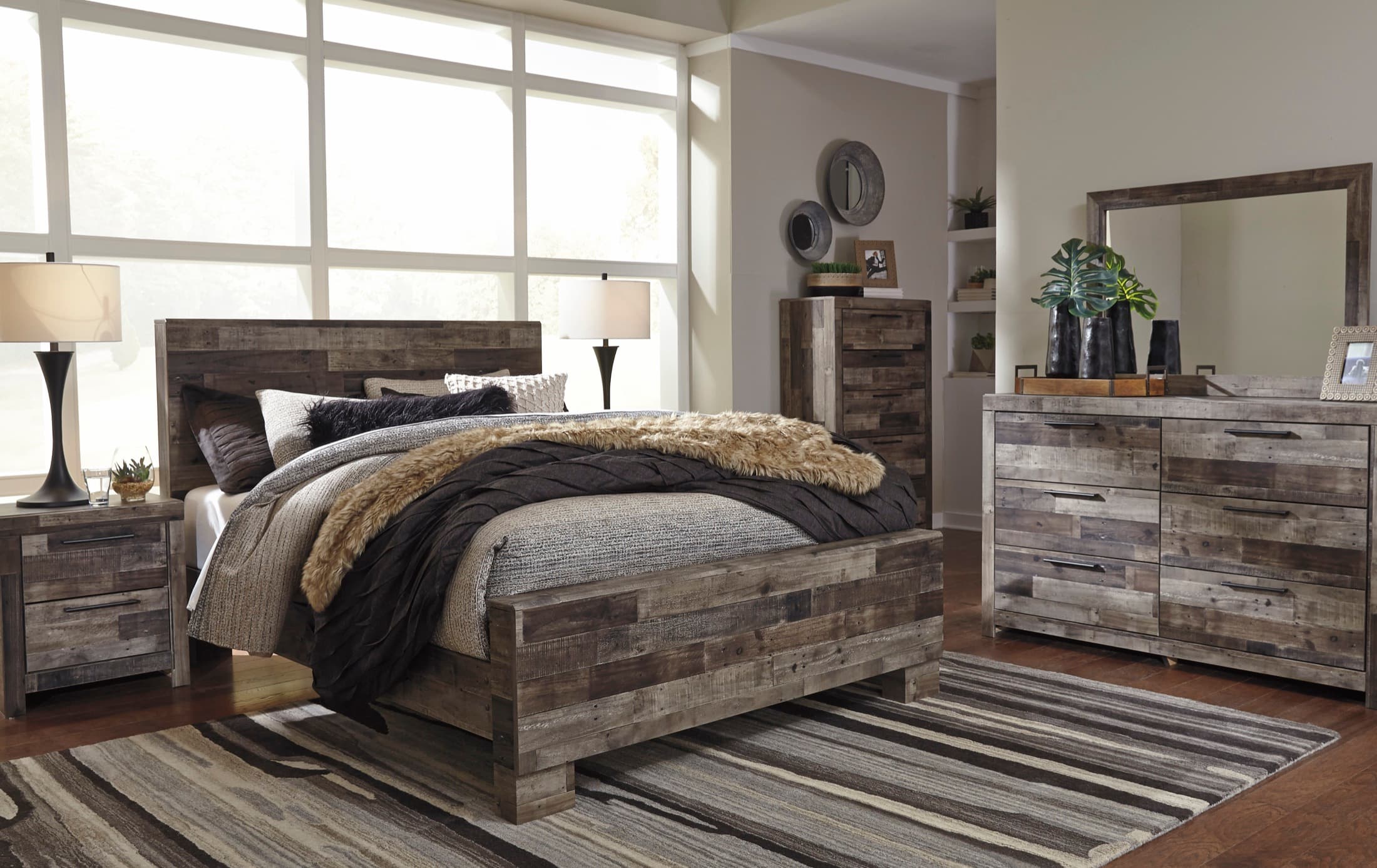
A dresser is wide and low. Typically 30 to 36 inches tall, 58 to 72 inches long, with six to nine drawers in two or three columns, and usually a mirror on top. You can see into every drawer from standing height and it doubles as a surface for a TV or decor. A chest of drawers (also called a tall dresser, chest, or highboy) is narrow and tall: 44 to 56 inches high, 30 to 40 inches wide, with four to six deep drawers stacked in one column. A chest holds nearly as much in half the wall space, but the top drawers are above eye level for shorter people and the top is not usable as a surface.
Which one should you buy?
- •Room with a long open wall: dresser. It anchors the wall and gives you a TV spot.
- •Small room or little wall space: chest of drawers. Same storage, a third of the footprint.
- •Big wardrobe, small closet: both. A dresser for folded everyday clothes, a chest for sweaters, jeans and off-season.
- •Kids' room: a low dresser with the anti-tip strap installed. Low and wide is harder to pull over than tall and narrow.
- •Guest room: a small 3- or 4-drawer dresser is plenty; most guests live out of a suitcase anyway.
Sizes that actually fit
Leave 36 inches in front of any dresser so the drawers open fully and a person can stand there. A dresser across from the foot of a queen bed needs about 10 feet between the bed rail and the dresser wall to stay comfortable. Nightstands should sit within 2 inches of the top of the mattress, which is 24 to 28 inches for most beds; a nightstand that is much lower than the mattress is awkward every single night. Browse dressers and nightstands with dimensions on every listing.
Solid wood dresser vs engineered wood: what you are paying for
A solid wood dresser uses real lumber for the frame and drawer fronts; it is heavier, can be refinished, and takes decades of abuse. Most mid-priced dressers use engineered wood (MDF or particleboard) with a wood veneer or a printed laminate over it. Good engineered wood with thick veneer is stable and looks great for years. The failure points are thin laminate that chips at the corners and particleboard drawer bottoms that sag. Wherever the case is made of, the drawer boxes are the tell: solid wood or plywood drawer sides with a real joint at the corners are the difference between a dresser that lasts and one that does not.
The 30-second drawer test
- •Pull every drawer out fully. It should glide without catching and stop before it falls out.
- •Push it shut with one finger from a corner. A good drawer closes square; a cheap one racks and jams.
- •Look at the drawer box corners. Interlocking joints beat staples.
- •Press on the drawer bottom. It should not flex.
- •Check the back panel of the case. A real panel, not cardboard, keeps the dresser square when it is dragged across carpet.
Tip-over safety: the rule every parent should know
Furniture tip-overs have killed children for decades, and since 2023 federal law requires new dressers and chests sold in the US to meet a stability standard (the STURDY Act, enforced through the ASTM F2057 standard). New dressers are tested with drawers open and a child-sized weight pulling on them. That is real progress, but the standard works with the anti-tip kit, not instead of it. Every dresser and chest we sell ships with a wall strap. Install it. It takes ten minutes, and it is the one step that makes a climbing toddler safe around a chest of drawers.
What is the difference between a dresser and a chest of drawers?
A dresser is wide and low, usually 30 to 36 inches tall with six to nine drawers in columns and often a mirror; a chest of drawers is tall and narrow, 44 to 56 inches high with four to six drawers stacked in one column. Dressers suit long walls and double as a TV surface; chests save floor space.
How tall should a nightstand be?
A nightstand top should sit within about 2 inches of the top of your mattress so you can reach a lamp or phone without looking. For most beds that is 24 to 28 inches tall; tall platform beds with thick mattresses may need 30 inches.
Do new dressers have to be anchored to the wall?
New dressers sold in the US since 2023 must meet a federal stability standard under the STURDY Act, but manufacturers and the Consumer Product Safety Commission still recommend anchoring every dresser and chest with the included anti-tip strap, especially in homes with children.
Our Cincinnati store carries dressers, chests and nightstands individually and as part of matching bedroom collections, with same day delivery on in-stock pieces and $11 down financing. Ask to pull a drawer before you buy; we would rather you find out on our floor than in your bedroom.
Dressers, chests and nightstands. Pull the drawers yourself.
Shop dressers