Finished basements are practically a Cincinnati tradition, and the question that comes with every one of them is what to sit on. Two answers dominate: a sectional couch with recliners built in, or dedicated home theater seating with individual power seats and cup holders. They look similar from across the room and they are completely different to live with. Here is how to pick.
What a reclining sectional gives you
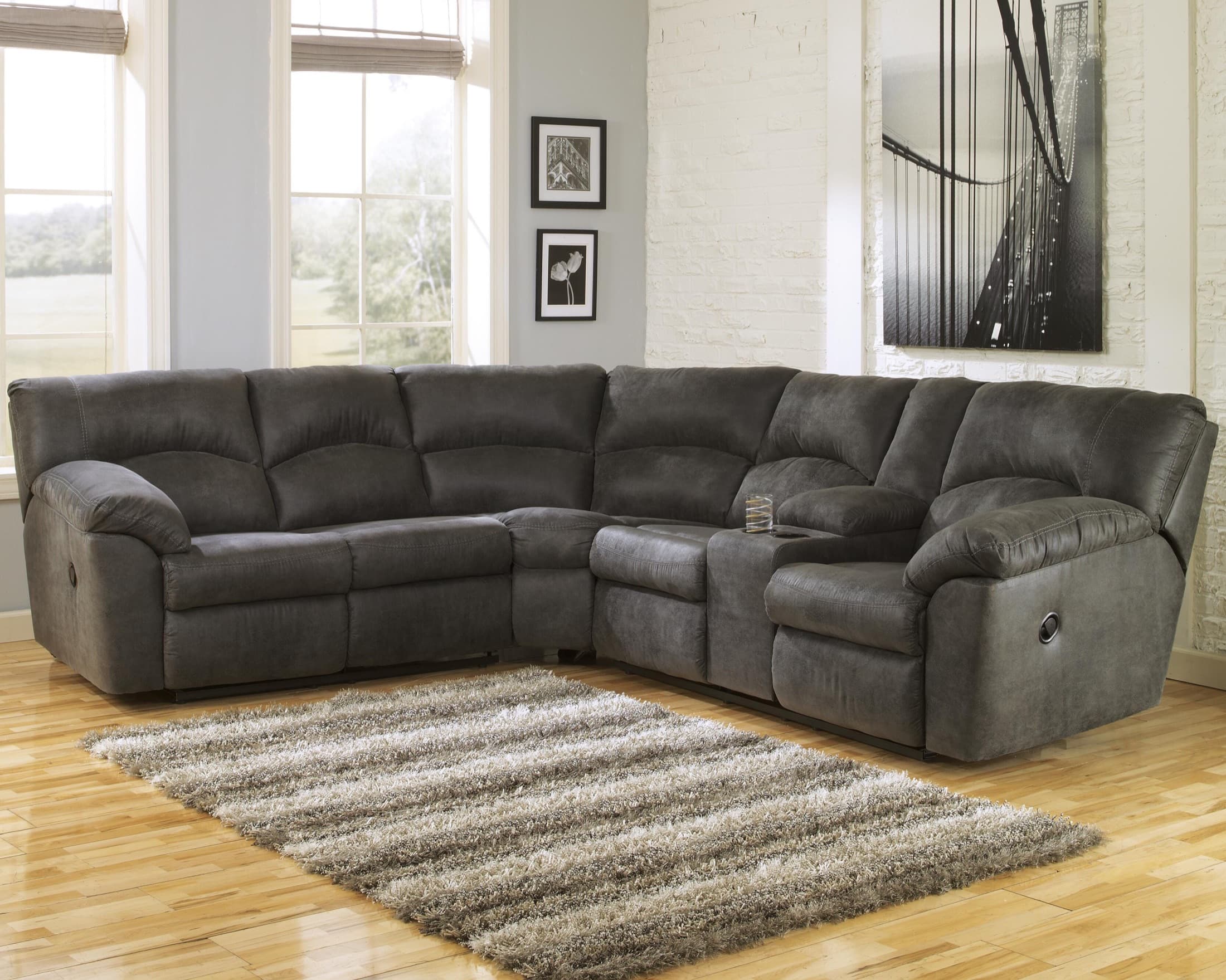
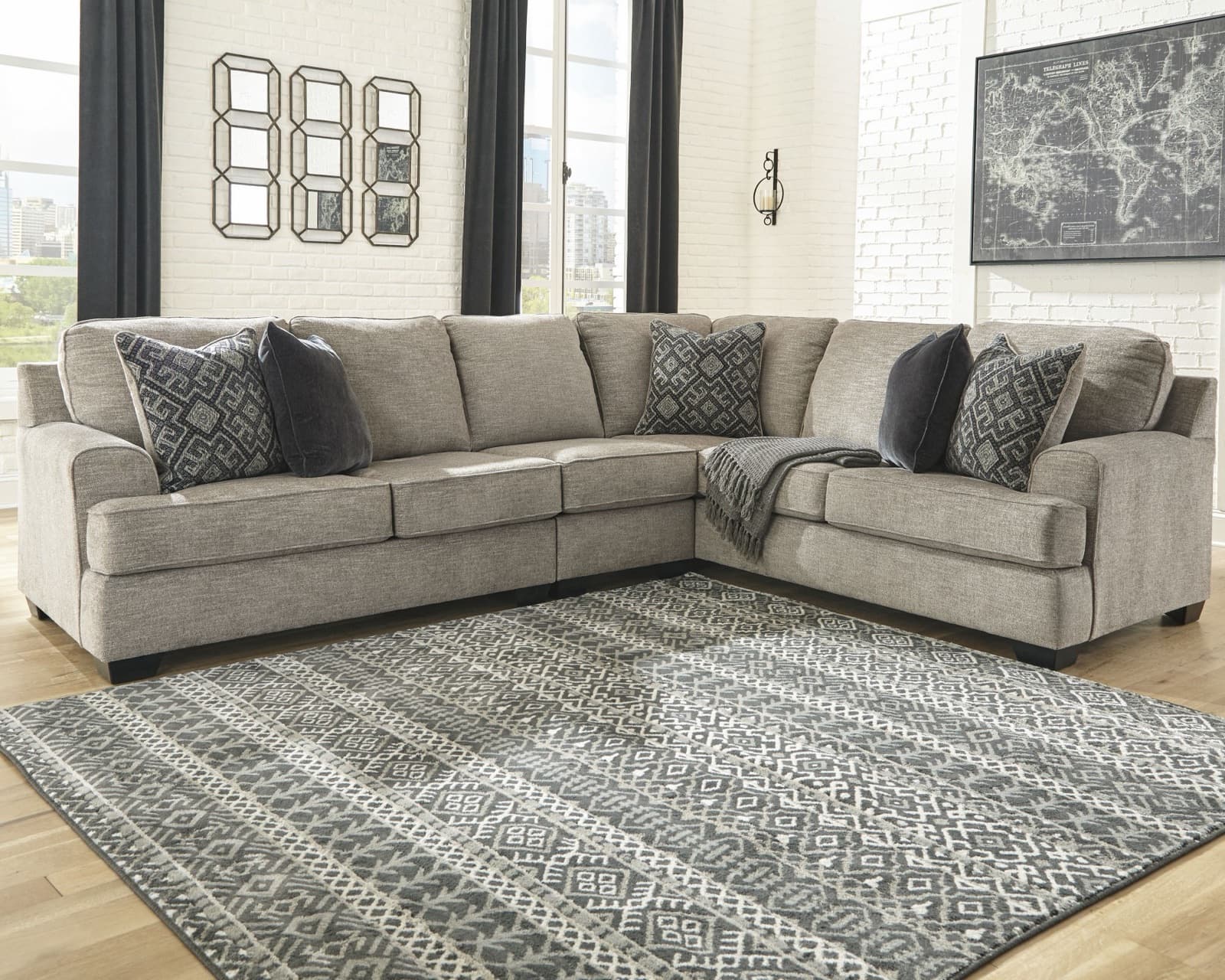
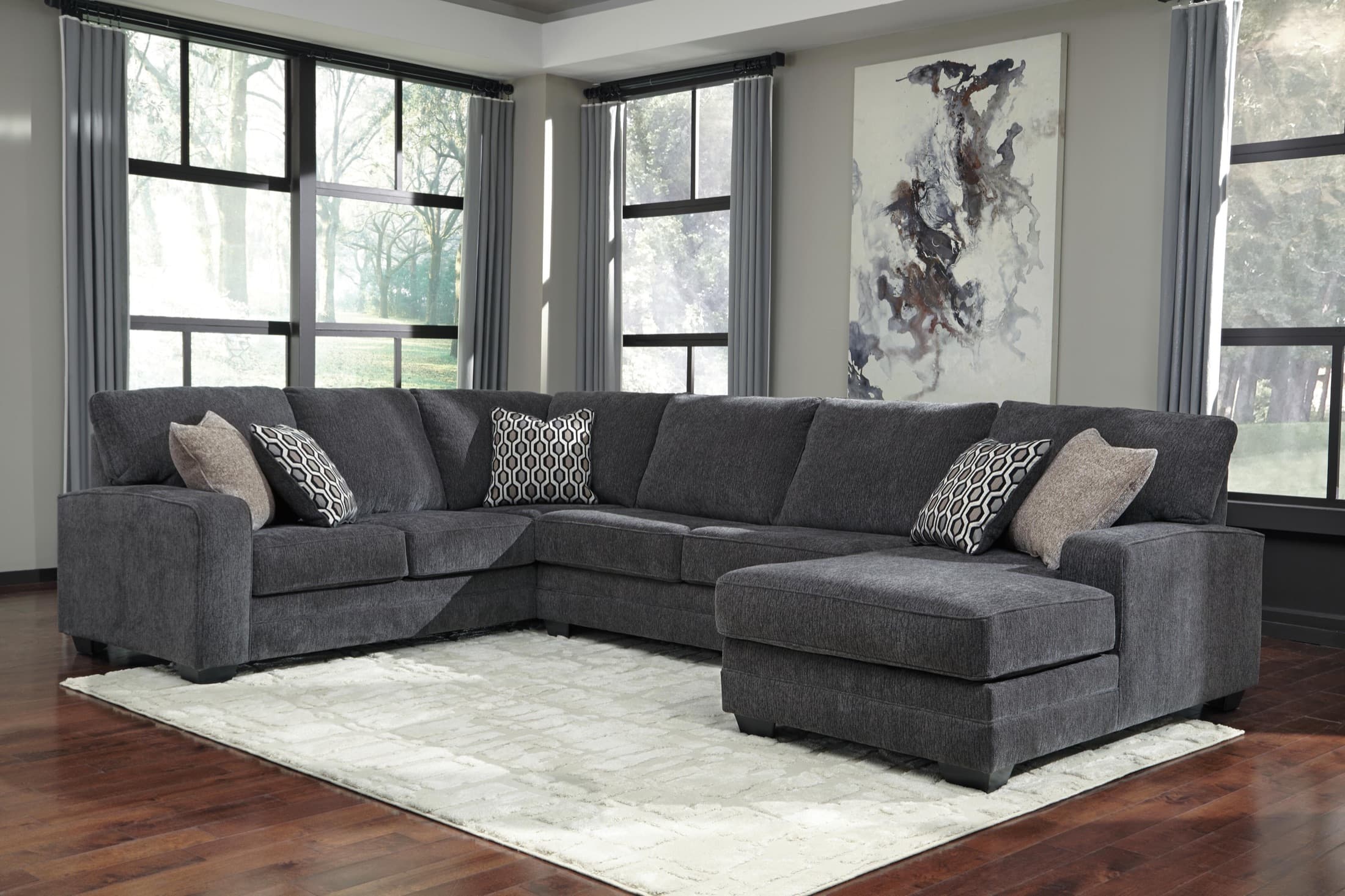
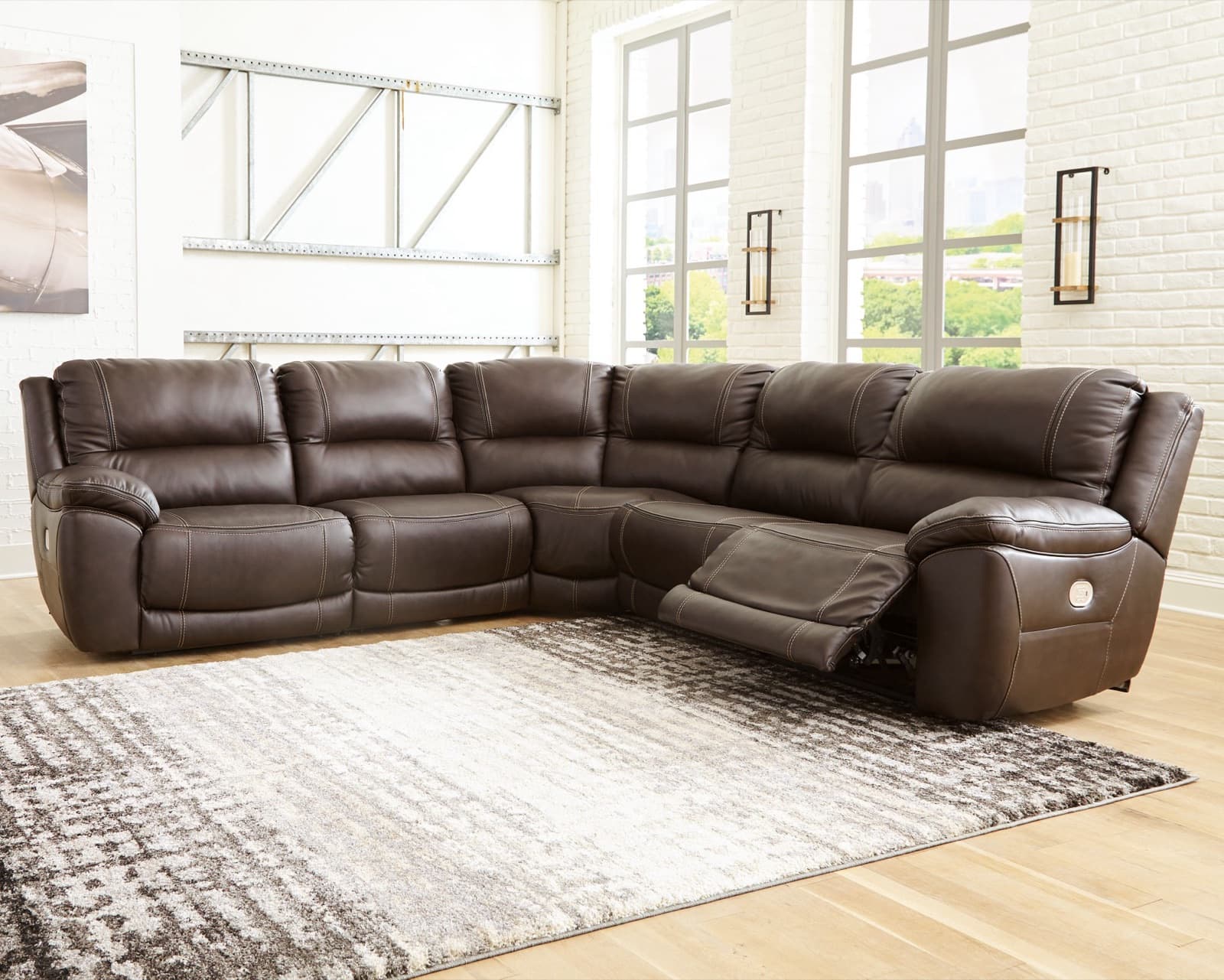
A reclining sectional is a normal L- or U-shaped sectional where some or all of the seats recline, usually the two end seats and sometimes the middle ones too. You get a couch first and a theater second: people can lie down, kids can pile on, the dog has a spot, and it works on an ordinary Tuesday when nobody is watching a movie. Most have a console wedge with cup holders and storage. Power versions add a button per seat and often USB ports. Browse reclining sectionals.
What home theater seating gives you
Home theater seating is a row of individual recliners, usually two to four, joined by shared arms with cup holders, sometimes with a center console and lighting. Every person gets their own seat, their own recline angle, and their own armrests. Nobody fights for the corner. It is the right answer for a room that is genuinely a theater and for households where the seats are mostly used by adults watching together. The cost is flexibility: nobody can lie down, two people cannot sit close, and when the movie is over it still looks like a theater.
Sightlines and rows
A reclining sectional naturally puts everyone on one curved line facing the screen, which works for a single row in a room up to about 14 feet wide. Home theater seating is modular enough to build two rows, and the back row on a 6- to 8-inch riser is the classic basement theater setup. If you want two rows, theater seating wins. If you want one row that doubles as the family couch, the sectional wins.
The clearance math for reclining furniture
- •Reclining seats need 12 to 18 inches behind them to open, unless they are wall-hugger mechanisms (4 to 6 inches).
- •A reclined seat extends 24 to 30 inches farther forward than an upright one. Keep the coffee table or ottoman clear of the footrest arc.
- •Figure about 38 to 42 inches of width per theater seat including the shared arm; a four-seat row is 13 to 14 feet wide.
- •Viewing distance for a 75-inch TV is roughly 9 to 13 feet for most people. Put the row where the footrests land in that zone, not where the seat backs are.
- •Power seats need outlets behind every section or a power strip hidden under the console. Plan the cord path before the carpet goes down.
Leather reclining sectional or fabric?
Leather is the traditional theater look: it wipes clean, it does not hold popcorn smell, and it stays cool. For a reclining piece specifically, insist on top-grain leather or a quality leather-match (real leather on every surface you touch, matched vinyl on the sides and back). Bonded leather peels at the flex points, and a recliner is nothing but flex points. Fabric is warmer for a cold basement, quieter, and usually cheaper; choose a performance fabric if kids and pets are part of the plan.
Our recommendation by room
- •Family room that is also the movie room: reclining sectional, power if the budget allows.
- •Dedicated basement theater, adults mostly, room for two rows: home theater seating.
- •Small basement, one row, tight on depth: wall-hugger reclining sectional or a 3-seat theater row with wall-saver mechanisms.
- •Kids under 10 in the house: reclining sectional. They will lie on it, climb on it and fall asleep on it, and a row of theater seats does none of that well.
Is a reclining sectional better than home theater seating?
For a room that doubles as the everyday family room, a reclining sectional is better because people can lie down and sit together. For a dedicated theater where adults watch in rows and everyone wants their own seat and recline angle, home theater seating is better.
How much space do you need for home theater seating?
Plan about 38 to 42 inches of width per seat, 12 to 18 inches of wall clearance behind a standard recliner (4 to 6 for wall-huggers), and 24 to 30 inches of extra depth in front for the footrests. A four-seat row is roughly 13 to 14 feet wide and about 6 feet deep when reclined.
Our Cincinnati store has power reclining sectionals and theater-style reclining rows on the floor, so you can sit in both in the same afternoon. In-stock pieces go home with same day delivery and $11 down financing. Bring the basement dimensions and the TV size and we will draw it out with you.
Power reclining sectionals for Cincinnati movie rooms.
Shop reclining sectionals