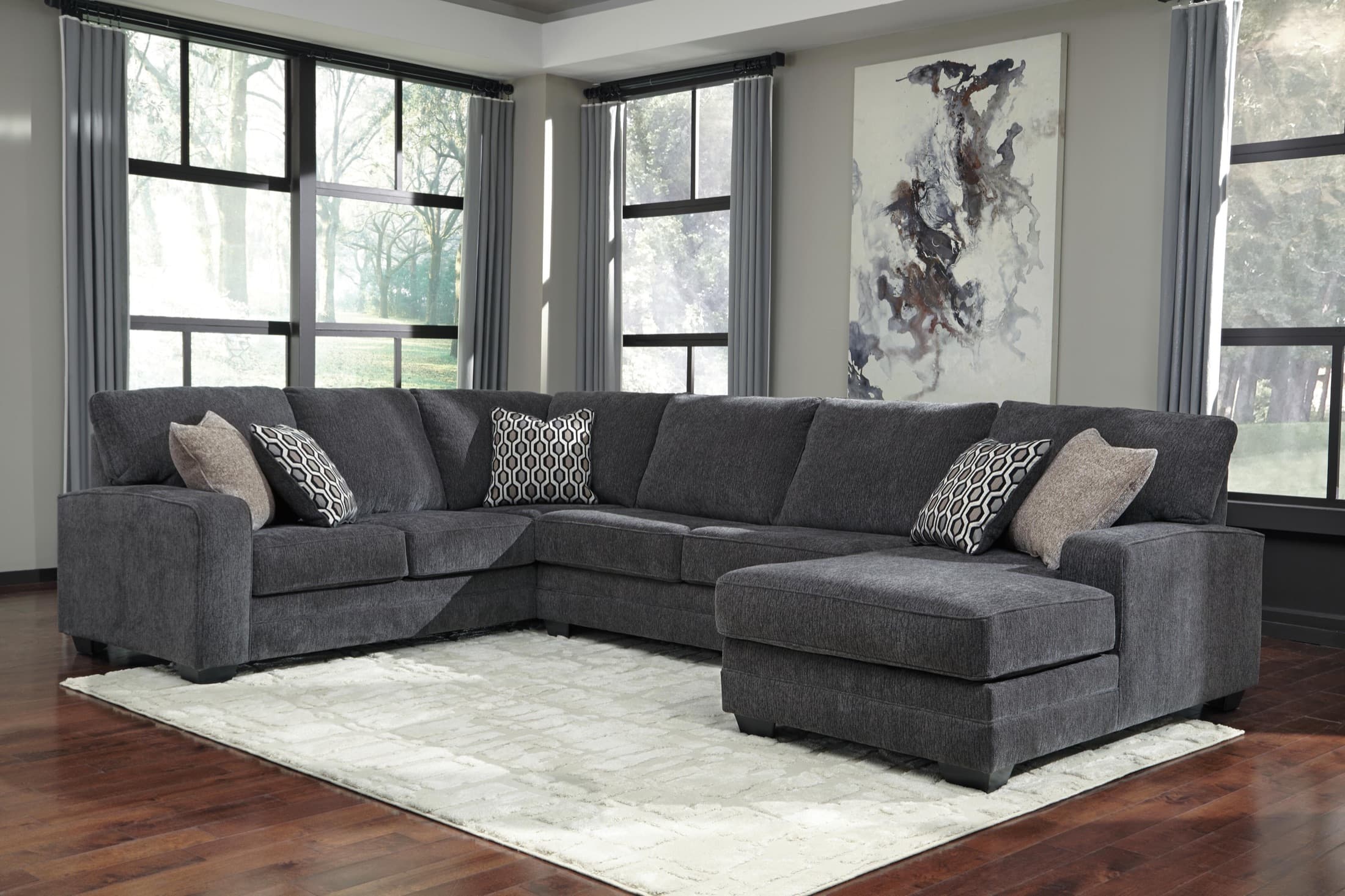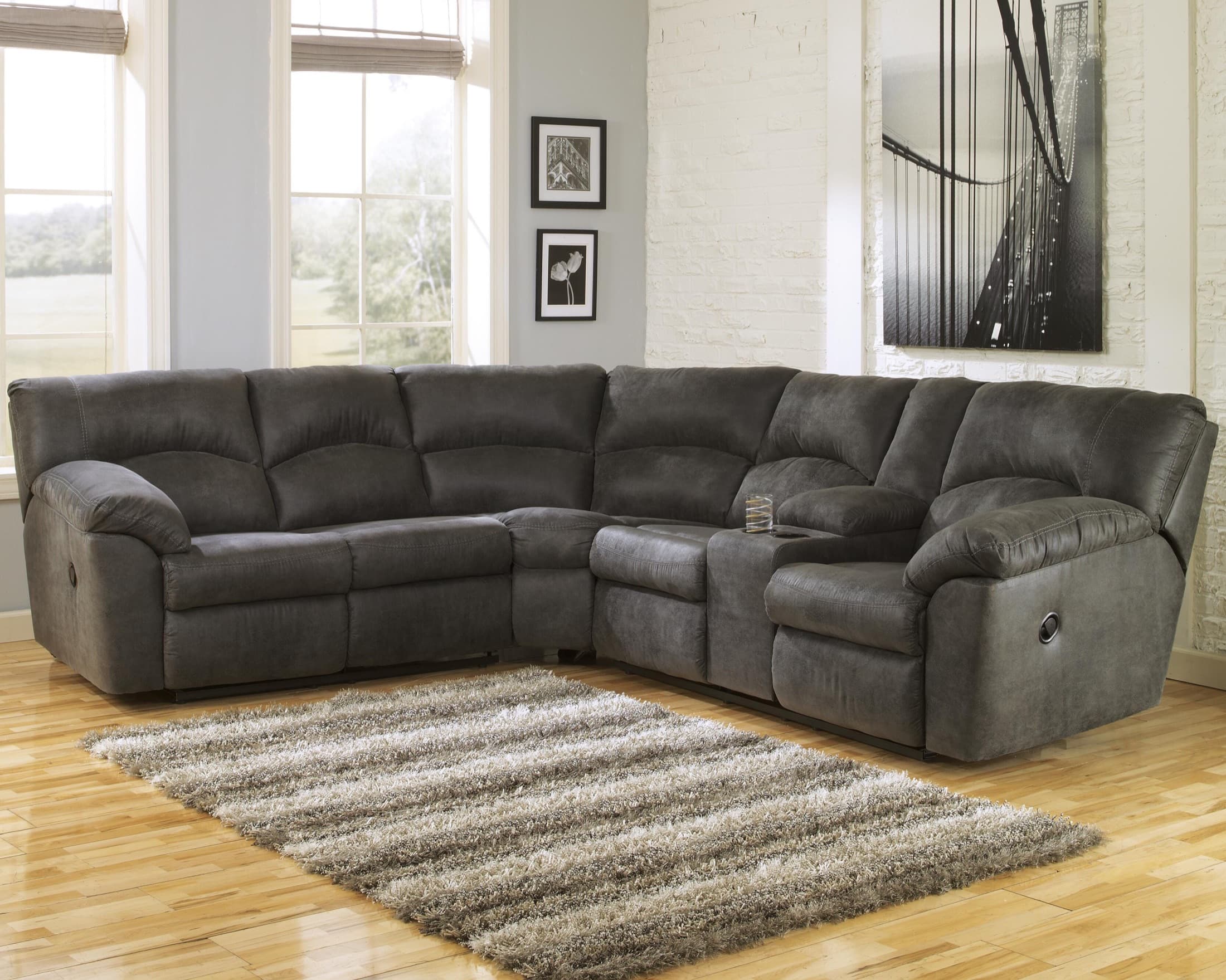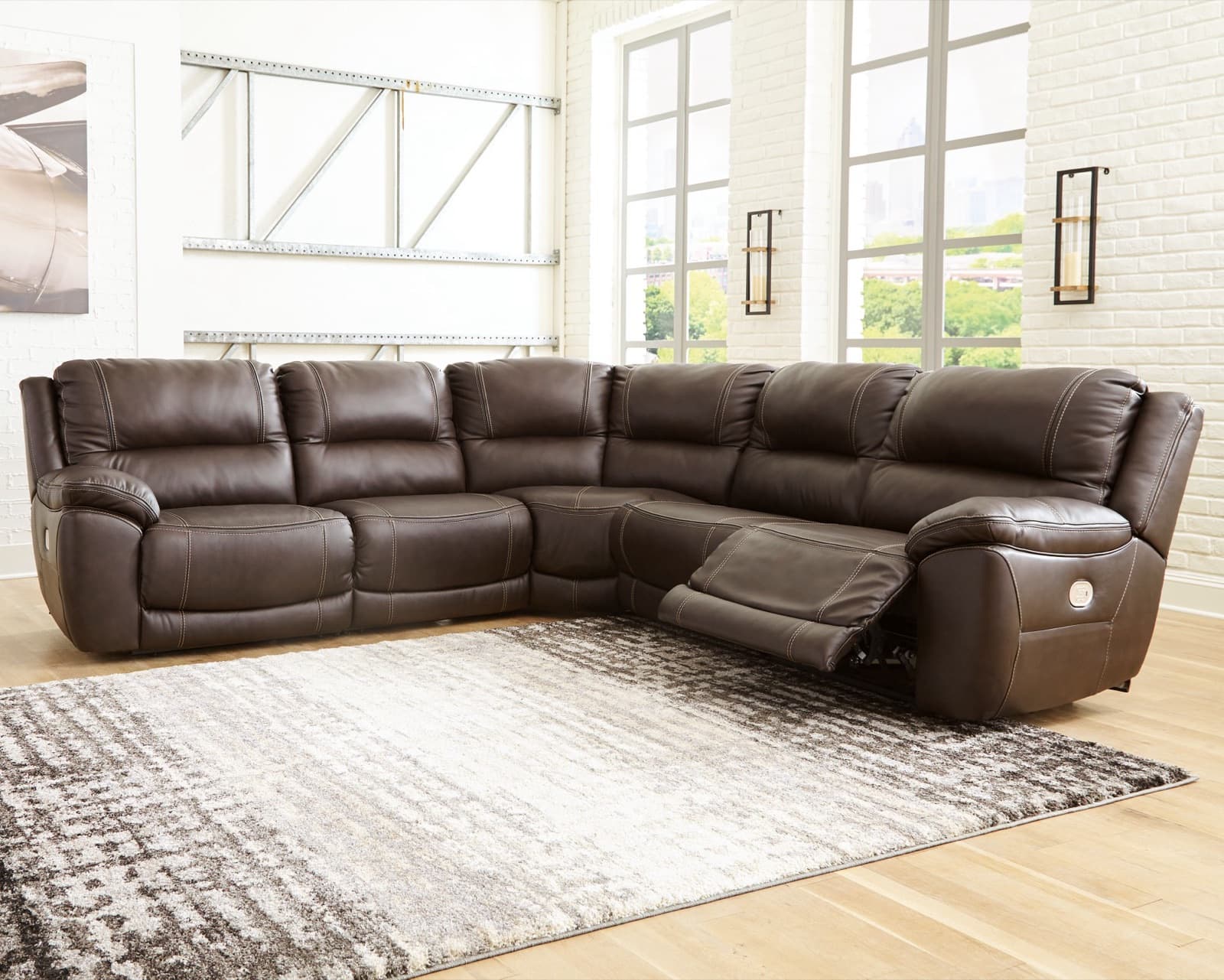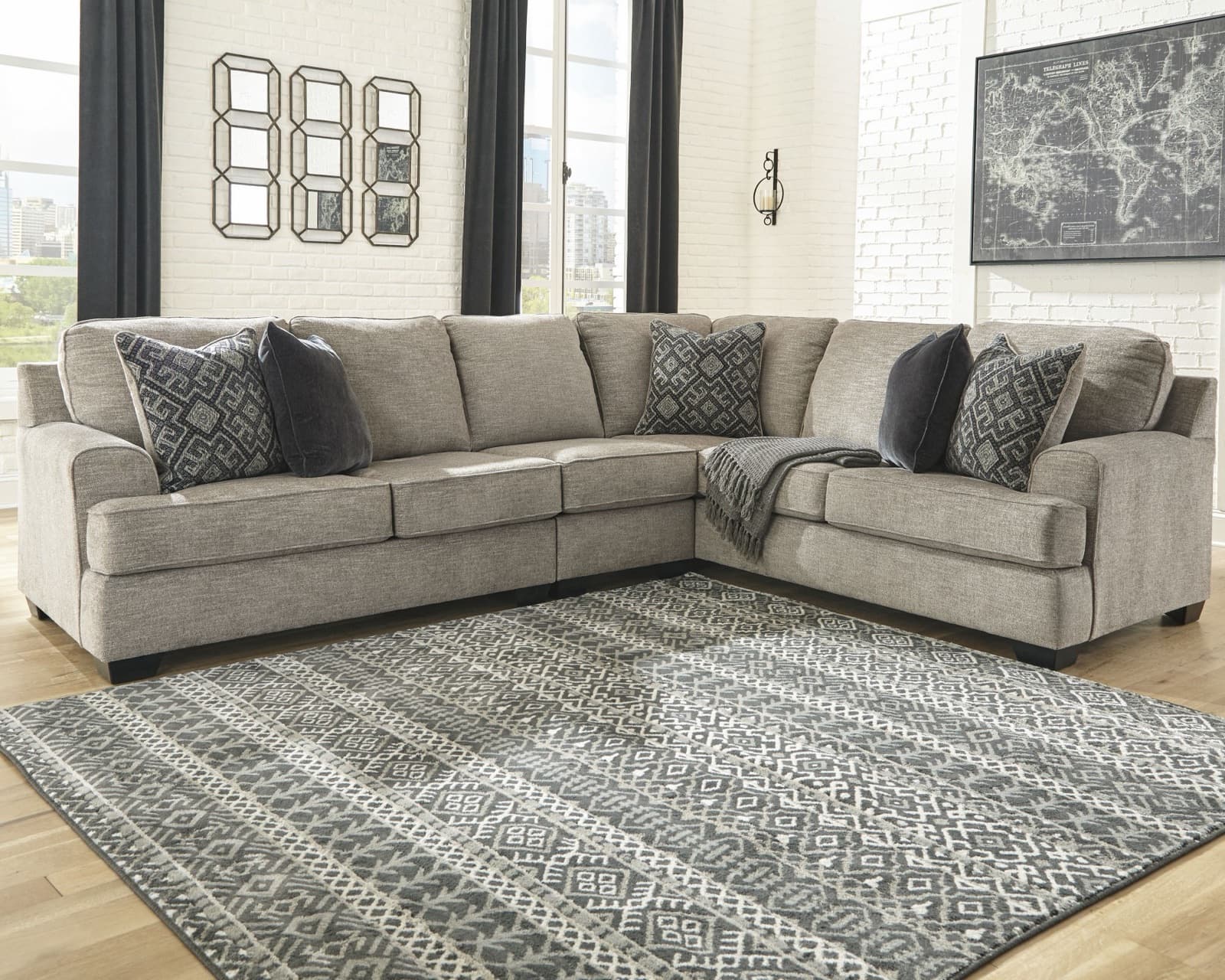
The leather-or-fabric question comes up on every couch sale we make in Cincinnati, and the answer is genuinely "it depends", but not on taste. It depends on who uses the couch, how warm your house is, and whether the leather you are looking at is actually leather. Here is how to decide, and how to read the tag.
The kinds of leather, because they are not the same product
- •Full-grain leather: the whole hide with the natural surface intact. Most durable, most expensive, rare on everyday furniture.
- •Top-grain leather: the outer layer of the hide, lightly sanded and finished. The standard for good leather furniture. Wipes clean, softens with use, lasts 15 to 25 years.
- •Leather-match: top-grain leather everywhere your body touches (seat, back, arms), matched vinyl on the outside back and sides. An honest way to get real leather at a lower price. Look for the words on the tag.
- •Split or bicast leather: the lower layer of the hide with a polyurethane coating on top. Looks uniform, wears faster, and can crack.
- •Bonded leather: ground-up leather scrap (often 10 to 20 percent) glued to a fabric backing and coated. It is not leather in any meaningful sense. It peels, usually within two to four years, and it peels worst on the seats and arms where the flex is. We do not recommend it at any price.
- •Faux leather, "pleather", PU or vegan leather: polyurethane or vinyl on a fabric base, no leather at all. Honest about what it is, easy to clean, cheap; quality varies hugely, and cheap PU also peels.
The kinds of fabric
- •Performance fabric: solution-dyed polyester, olefin or acrylic blends where the color runs through the fiber. Spills wipe out, tight weave resists claws, now soft enough for a bedroom. The best all-around fabric for a family.
- •Polyester and poly blends: the workhorse. Durable, affordable, colorfast; quality depends on the weave density.
- •Microfiber: very dense polyester suede. Soft, cleanable, pet-hair-friendly; shows water marks on dark colors.
- •Chenille: soft and plush; the loose loops snag with cats.
- •Velvet: beautiful, crushes where people sit, holds hair.
- •Linen and cotton: natural and breathable; they stain and wrinkle. For a grown-up living room nobody eats in.
Durability: which lasts longer?
Top-grain leather, cared for, outlasts nearly any fabric. It does not pill, it does not fade much indoors, and scratches blend in. Performance fabric is the closest fabric competitor and will look good for 7 to 12 years under normal use. Bonded leather and cheap faux leather lose to both, usually to a peeling seat within a few years. So the real durability ranking is top-grain leather, then performance fabric, then good polyester, then everything else. Leather's one weakness is cats: claws puncture it and the marks are permanent, where a fabric snag can be trimmed.
Comfort: the Cincinnati winter factor
Leather is cold when you sit down in January and sticky in a humid July without air conditioning. It warms up in a minute and most people stop noticing, but a fabric couch is simply warmer and softer to fall asleep on. If your living room is in a basement or an older house that runs cool, fabric wins on comfort. If the room is warm and sunny, leather feels cool and pleasant.
Kids, pets and spills
- •Toddlers and spills: leather or performance fabric. Both wipe. Avoid linen, velvet and light cotton.
- •Dogs: leather or microfiber. Hair does not weave in and both wipe clean.
- •Cats: performance fabric with a tight flat weave. Not leather, not chenille, not bouclé. Our full pet-fabric guide is here.
- •Teenagers: performance fabric in a mid-tone color. Enough said.
Color: grey, black or brown?
Grey sectional couches are the most-searched color in Cincinnati by a wide margin, followed by black and brown. Grey fabric hides the most, goes with everything, and is the safest resale color. Black leather looks sharp and shows dust and pet hair; black fabric hides both better. Brown leather is the classic for a reason: it hides scuffs and looks better at year ten than year one. Whatever the color, bring a cushion home if the store allows it, because showroom lighting lies. Browse couches and sectionals by color.
Is a leather or fabric couch better?
Top-grain leather lasts longest and is easiest to wipe clean, which suits warm rooms, dogs and spills. Fabric, especially performance fabric, is warmer, softer, cheaper and safer with cats. Bonded leather is the worst of both and should be avoided because it peels within a few years.
What is pleather and does it peel?
Pleather is a nickname for faux leather: polyurethane or vinyl coated onto a fabric backing with no real leather in it. Quality varies widely. Cheap pleather and bonded leather both tend to peel at the seat and arms within two to four years; better polyurethane holds up longer but still does not age like real leather.
How can you tell if a couch is real leather?
Read the tag for the words top-grain, full-grain or leather-match, which name real leather. Then look closely: real leather has slightly irregular grain and pores and feels warm and soft, while bonded and faux leather show a perfectly uniform repeating pattern and feel cool and plasticky. Leather also does not stretch like fabric when you pinch it.
Our Cincinnati store lists the exact cover material on every couch, sectional and recliner, and we will tell you plainly when something is leather-match or faux leather. Sit on both, bring the dog question, and take it home the same day with $11 down.
Leather and fabric couches, labeled honestly. Sit on both.
Shop couches